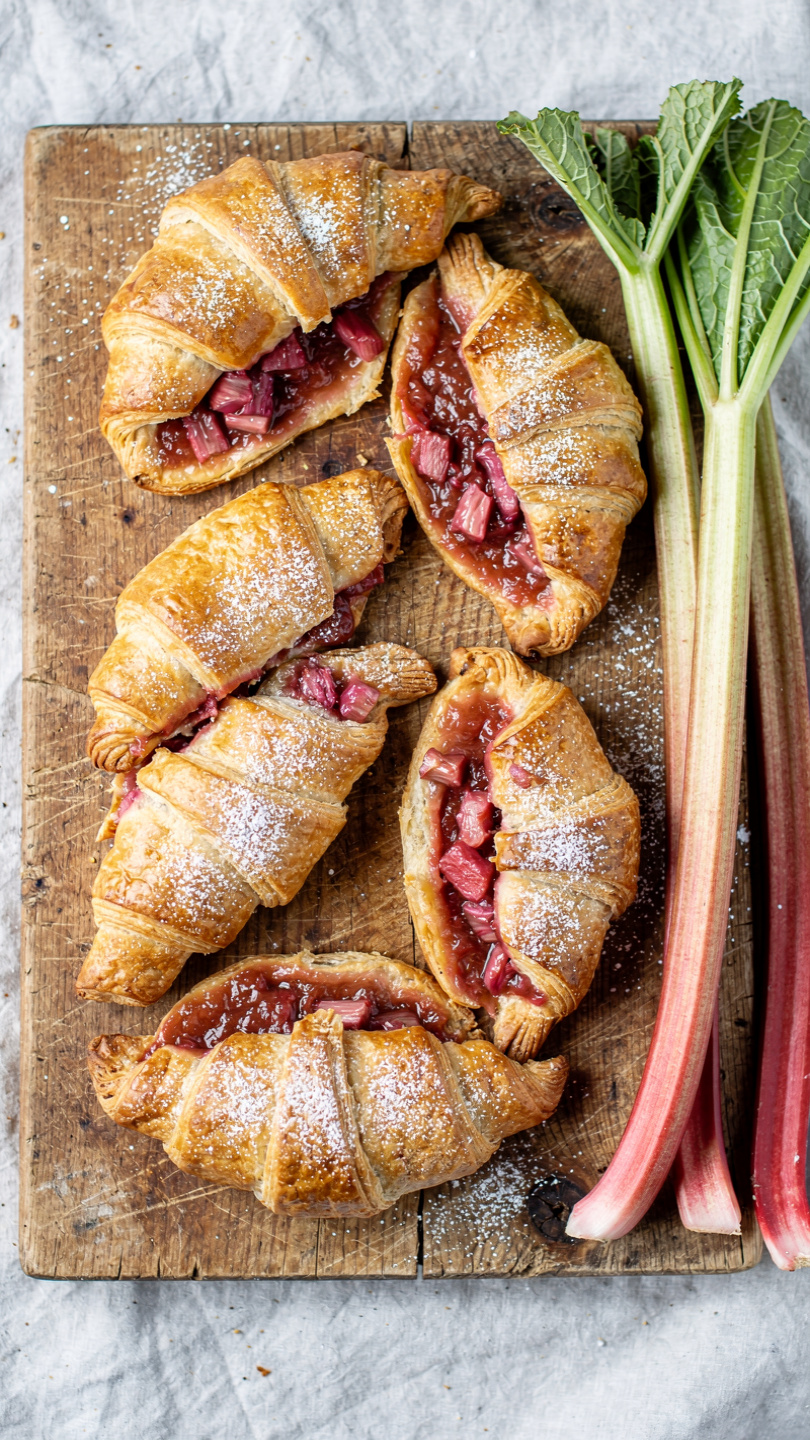
Rhubarb Crescent Pastry
These flaky Rhubarb Crescent Pastries are filled with a sweet-tart rhubarb compote and wrapped in buttery crescent dough for an easy, impressive treat ready in under an hour.

The Spring Pastry You Will Make on Repeat
If you have ever stared at a bunch of rhubarb at the farmers market and thought "I want to do something with that but not an entire pie," this recipe is your answer. These Rhubarb Crescent Pastries are everything you want from a spring bake: tangy, sweet, golden, flaky, and genuinely easy to pull off on a weeknight. No pie crust to fuss with, no fancy equipment, just a quick jammy compote tucked inside buttery crescent dough and baked until irresistible.
Rhubarb has this wonderful quality where it transforms completely with just a little sugar and heat. The sharp tartness mellows into something almost fruity and complex. Wrapped inside a crescent roll and finished with a simple vanilla glaze, it feels far more special than the ingredient list would suggest.
Using good quality crescent roll dough and fresh rhubarb makes a noticeable difference in both flavor and texture here. The right small saucepan also helps the compote cook evenly without scorching.
Tools & Ingredients We Recommend



Why This Recipe Works So Well
The secret is in the compote technique. Rather than stuffing raw rhubarb into the dough and hoping for the best, you cook it down briefly with sugar, lemon juice, and cornstarch. That quick step does three important things:
- It draws out excess moisture so the pastry stays crisp and flaky, not soggy
- It concentrates the rhubarb flavor dramatically
- It creates a thick, spoonable filling that stays put when you roll the dough
The result is a pastry that holds together beautifully in your hand while still delivering a burst of jammy rhubarb in every bite.
Chef's Tip: Do not skip the cooling step for the compote. Even 10 minutes of cooling makes a real difference. Hot filling will make the dough greasy and difficult to roll.
Choosing Your Rhubarb
Fresh rhubarb is ideal when it is in season, roughly from April through June depending on your region. Look for firm stalks with a vibrant deep pink or red color. The redder the stalk, the sweeter the rhubarb tends to be, though green-stalked varieties taste just as good once cooked with sugar.
If rhubarb season has passed, frozen rhubarb works wonderfully in this recipe. Just thaw it completely and drain off the collected liquid before you start cooking the compote. The flavor is nearly identical and this recipe becomes a year-round option.
Note: Rhubarb leaves are toxic and should never be eaten. Always trim the stalks well above where the leaf meets the stalk.
Serving Suggestions
These pastries are best enjoyed warm, about 5 to 10 minutes out of the oven, when the glaze has just set and the interior is still soft and fragrant. They are wonderful alongside:
- A strong cup of black coffee or Earl Grey tea
- A scoop of vanilla bean ice cream for a dessert plate
- Fresh whipped cream and a few slivered almonds on top
- A brunch spread alongside eggs and fruit salad
For a fancier presentation, dust lightly with powdered sugar right before serving instead of the glaze.
Ready to bake? Here is the full step-by-step recipe:
Rhubarb Crescent Pastry
These flaky Rhubarb Crescent Pastries are filled with a sweet-tart rhubarb compote and wrapped in buttery crescent dough for an easy, impressive treat ready in under an hour.
Ingredients
- 1 can refrigerated crescent roll dough, 8-count standard size
- 2 cups fresh rhubarb, trimmed and diced into small pieces
- 3/8 cup granulated sugar, plus extra for sprinkling on top
- 1 tbsp cornstarch
- 1/2 tsp vanilla extract
- 1/4 tsp ground cinnamon
- 1 tbsp lemon juice, freshly squeezed
- 1 large egg, beaten, for egg wash
- 1/2 cup powdered sugar, for the glaze
- 1 tbsp milk, for the glaze
Instruction
Preheat your oven to 375 degrees F (190 degrees C) and line a large baking sheet with parchment paper.
In a small saucepan over medium heat, combine the diced rhubarb, granulated sugar, cornstarch, lemon juice, and cinnamon. Cook, stirring frequently, for 5 to 7 minutes until the rhubarb softens and the mixture thickens into a jammy compote. Remove from heat and stir in the vanilla extract. Let it cool for 10 minutes.
Unroll the crescent roll dough and separate it into 8 individual triangles along the perforations.
Spoon about 1 tablespoon of the cooled rhubarb filling onto the wide end of each triangle. Do not overfill or the pastries will burst open during baking.
Starting at the wide end, roll each triangle up toward the point, tucking the sides in gently as you go to enclose the filling. Place them on the prepared baking sheet with the pointed tip tucked underneath.
Brush each pastry lightly with the beaten egg wash, then sprinkle with a pinch of granulated sugar.
Bake for 13 to 18 minutes, or until the pastries are deep golden brown and puffed. Keep a close eye on them after the 13-minute mark as oven temperatures vary.
While the pastries cool for 5 minutes on the pan, whisk together the powdered sugar and milk in a small bowl until smooth.
Drizzle the glaze over the warm pastries and serve immediately, or let them set for a few more minutes if you prefer a firmer drizzle.
Equipment
- Small saucepan
- Wooden spoon or silicone spatula
- Large baking sheet
- Parchment paper
- Pastry brush
- Small mixing bowl
- Whisk
Notes
Storage and Make-Ahead Tips
One of the best things about this recipe is how flexible it is for planning ahead. The rhubarb compote keeps in the refrigerator for up to 3 days, so you can make it over the weekend and have pastries ready to assemble in minutes any morning of the week.
Baked pastries store well at room temperature for 2 days or in the refrigerator for up to 4 days. A quick 5-minute reheat in a low oven brings the crispness right back. These also freeze well before baking. Assemble them on a sheet pan, freeze until solid, then transfer to a zip-top bag. Bake from frozen at 375 degrees F, adding about 5 extra minutes to the bake time.