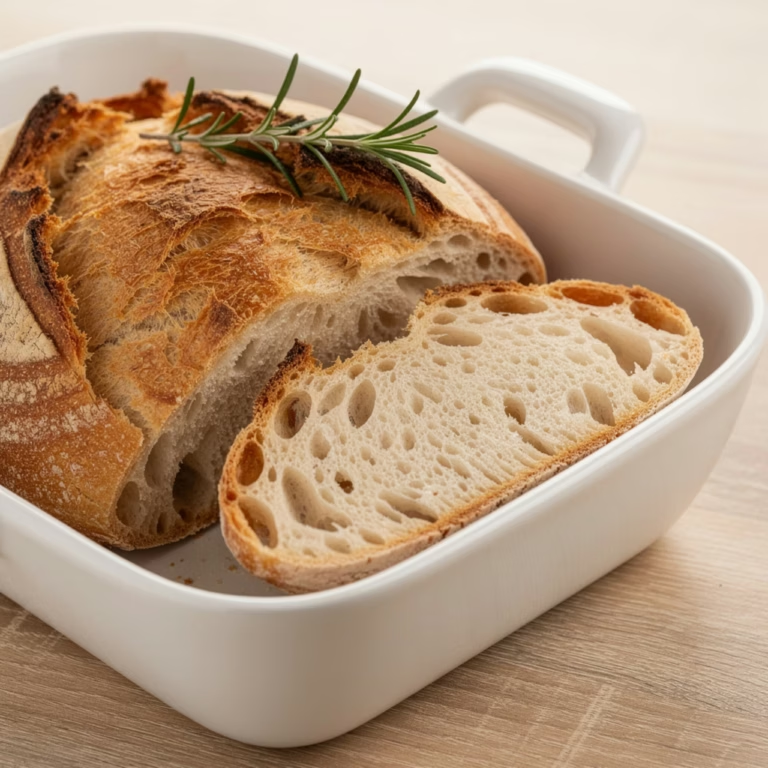
Best Maple Pecan Sourdough Bread for Winter Baking
There is something deeply satisfying about pulling a golden, fragrant loaf of Maple Pecan Sourdough Bread from the oven on a cold morning. The sweet warmth of maple syrup, the toasty crunch of pecans, and that signature tang of a well-fermented sourdough all come together in a loaf that feels like a celebration. Whether you are an experienced sourdough baker or just starting to explore homemade sourdough bread recipes, this one is genuinely worth your time.
This loaf has become a seasonal staple in my kitchen, especially during winter baking season when the house needs a little extra warmth and the table deserves something special. It slices beautifully, toasts like a dream, and tastes incredible with a smear of salted butter or a drizzle of extra honey. Once you bake it, you will understand why Pecan Sourdough Bread has earned such a devoted following.
What Makes This Recipe Special
- Naturally sweetened: Real maple syrup adds a gentle, earthy sweetness that pairs perfectly with the sourdough tang, no refined sugar needed.
- Incredible texture: The chopped pecans create pockets of crunch throughout the crumb, giving every slice a satisfying contrast.
- Long fermentation flavor: The overnight cold proof develops deep, complex flavors that you simply cannot rush, making this one of the most rewarding homemade sourdough bread recipes around.
- Versatile and stunning: Equally at home on a holiday brunch table or as an everyday breakfast loaf, this bread impresses every single time.
Essential Ingredients
- Active sourdough starter: 100g at peak activity, bubbly and doubled, this is the heart of your Maple Sourdough Bread.
- Bread flour: 400g, the higher protein content builds strong gluten structure for an open, chewy crumb.
- Whole wheat flour: 50g, adds nutty depth and helps the crust develop a rich color.
- Water: 325g at room temperature, hydration is key for a moist, tender crumb.
- Pure maple syrup: 40g, use real Grade A maple syrup for the best flavor, not pancake syrup.
- Fine sea salt: 10g, enhances every other flavor in the loaf.
- Raw pecan halves: 120g, roughly chopped, toasting them briefly before adding intensifies their flavor dramatically.
- Ground cinnamon: 1 teaspoon, ties together the maple and pecan notes beautifully, the secret ingredient in this Cinnamon Pecan Sourdough Bread.
Using quality tools and premium ingredients makes a noticeable difference in sourdough baking, from your Dutch oven to the maple syrup you choose.
Here’s the complete recipe:

Maple Pecan Sourdough Bread
Equipment
- Large mixing bowl
- Dutch oven (5 to 7 quart)
- Banneton proofing basket
- Bench scraper
- Kitchen scale
- Lame or sharp razor blade
- Dry skillet
Ingredients
- 100 g active sourdough starter at peak activity, bubbly and doubled
- 400 g bread flour plus more for dusting
- 50 g whole wheat flour
- 325 g water room temperature, about 75F
- 40 g pure maple syrup Grade A, not pancake syrup
- 10 g fine sea salt
- 120 g raw pecan halves roughly chopped and toasted
- 1 tsp ground cinnamon
Instructions
- Toast the chopped pecans in a dry skillet over medium heat for 3 to 4 minutes, stirring frequently, until fragrant and lightly golden. Remove from heat and allow to cool completely.
- In a large mixing bowl, combine the active sourdough starter, room temperature water, and maple syrup. Whisk briefly to combine, then add both flours. Mix with your hand or a stiff spatula until no dry flour remains. Cover the bowl and let the dough rest for 45 minutes (autolyse).
- Sprinkle the salt over the dough and dimple it in with wet fingers. Squeeze and fold the dough repeatedly until the salt is fully incorporated, about 2 minutes. This is your first stretch and fold. Cover and rest 30 minutes.
- Perform a second stretch and fold. During this round, scatter the cooled toasted pecans and ground cinnamon evenly over the dough, then fold and tuck everything in gently until the mix-ins are evenly distributed throughout. Cover and rest 30 minutes.
- Perform two more sets of stretch and folds at 30-minute intervals, for a total of 4 sets over 2 hours. After the final fold, leave the dough covered and undisturbed to complete bulk fermentation at room temperature (around 75F) for 2 to 3 more hours, until the dough has grown about 50 percent and appears airy with visible bubbles.
- Turn the dough out onto a lightly floured surface. Using a bench scraper, gently pre-shape into a rough round. Let it rest uncovered on the bench for 20 minutes to relax the gluten.
- Do a final tight shaping into a boule or batard, building good surface tension. Place the shaped loaf seam-side up into a well-floured banneton. Cover with a shower cap or plastic wrap and refrigerate overnight (10 to 14 hours) for the cold proof.
- When ready to bake, place your Dutch oven (with its lid) into the oven and preheat to 500F (260C) for at least 45 minutes. You want the pot screaming hot before the dough goes in.
- Remove the cold dough from the refrigerator. Turn it out onto a sheet of parchment paper. Using a lame or sharp razor, score the top of the loaf with one confident slash or a decorative pattern. Carefully lower the parchment and dough into the hot Dutch oven, cover with the lid, and bake for 20 minutes.
- Remove the Dutch oven lid and reduce the oven temperature to 460F (238C). Continue baking uncovered for 20 to 25 minutes, until the crust is a deep golden brown and the internal temperature reads 205 to 210F (96 to 99C) on an instant-read thermometer.
- Transfer the loaf to a wire rack and allow it to cool for at least 1 hour before slicing. The crumb continues to set during this time, so patience here is rewarded with clean, beautiful slices.
Notes
Make It Your Own
- Swap the nuts: Walnuts or hazelnuts work beautifully in place of pecans if that is what you have on hand.
- Add dried fruit: A handful of dried cranberries or raisins folded in with the cinnamon pecans makes a gorgeous holiday variation.
- Boost the spice: A pinch of cardamom or nutmeg alongside the cinnamon takes the warmth to another level, perfect for deep winter baking.
- Go extra maple: Brush the top of the baked loaf with a light maple glaze right out of the oven for a glossy, caramelized crust.
How to Make Maple Pecan Sourdough Bread
- Toast the pecans: Spread chopped pecans on a dry skillet over medium heat and toast for 3 to 4 minutes, stirring often, until fragrant. Let them cool completely before using.
- Mix the dough: In a large bowl, combine the active starter, water, and maple syrup. Add both flours and stir until no dry flour remains. Cover and rest for 45 minutes (autolyse).
- Add salt and fold: Sprinkle in the salt and dimple it into the dough with wet fingers. Perform 4 sets of stretch and folds over 2 hours, spaced 30 minutes apart, to build strength.
- Incorporate the mix-ins: During the second stretch and fold, scatter the toasted pecans and cinnamon evenly over the dough and fold them in gently but thoroughly.
- Bulk fermentation: Cover the bowl and allow the dough to ferment at room temperature (around 75F) for a total of 4 to 5 hours, until it has grown by about 50 percent and looks airy.
- Shape the loaf: Turn the dough onto a lightly floured surface, pre-shape into a round, rest 20 minutes, then do a final tight shaping into a batard or boule.
- Cold proof overnight: Place the shaped loaf seam-side up into a floured banneton, cover with plastic wrap, and refrigerate for 10 to 14 hours.
- Bake in a Dutch oven: Preheat your oven with the Dutch oven inside to 500F (260C) for at least 45 minutes. Score the cold loaf, place it into the pot, cover, and bake for 20 minutes. Remove the lid and bake another 20 to 25 minutes until deep golden brown.
- Cool completely: Resist cutting into the loaf for at least 1 hour. The crumb continues to set as it cools, and cutting too early gives you a gummy interior.
Tips for Best Results
- Use a truly active starter: Your Maple Pecan Sourdough Bread will only be as good as your starter. Feed it 4 to 8 hours before mixing and use it when it is domed and bubbly at its peak.
- Do not skip the cold proof: The overnight refrigeration is what gives Cinnamon Pecan Sourdough Bread its deep flavor and makes scoring and handling the dough much easier.
- Watch your dough temperature: Aim for a dough temperature of 75 to 78F throughout bulk fermentation. A warmer kitchen means faster fermentation, and a colder one slows it down.
- Avoid overbaking the pecans during toasting: They go from perfectly toasted to bitter quickly. Pull them off the heat the moment you smell that warm, nutty fragrance.
Baker’s note: If your crust is browning too quickly during the open bake, tent a piece of aluminum foil loosely over the top for the last 10 minutes.
Serving Suggestions
- Slice thickly and serve warm with salted European-style butter and a generous drizzle of maple syrup for a truly indulgent breakfast.
- Pair with a sharp cheddar and apple slices for a savory-sweet snack board that will impress any guest.
- Toast slices and top with cream cheese and fresh berries for a brunch spread that feels effortless and elegant.
- Use slightly stale slices to make an extraordinary French toast, the sourdough tang and maple flavor make it absolutely next-level.
Make Ahead and Storage
- Room temperature: Once fully cooled, store the loaf cut-side down on a cutting board or wrapped in a clean kitchen towel for up to 3 days. Avoid plastic bags, which soften the crust.
- Freezing: Slice the entire loaf and freeze in a single layer on a baking sheet, then transfer to a zip-lock freezer bag. Frozen slices keep well for up to 3 months.
- Reheating: Reheat slices directly in a toaster, or warm the whole loaf (unwrapped) in a 350F oven for 10 minutes to revive the crust beautifully.
- Refrigerating: Avoid storing sourdough in the fridge, as it accelerates staling. Room temperature or freezer is always the better option.
Frequently Asked Questions
Can I make this without a Dutch oven?
Yes, you can bake the loaf on a preheated baking stone or heavy sheet pan. Place a pan of boiling water on the oven floor for the first 20 minutes to create steam, which helps the crust develop.
My starter is sluggish in winter. What should I do?
Winter baking often means slower fermentation. Try proofing your starter in a slightly warmer spot, like on top of the refrigerator or in your oven with just the light on. Extending bulk fermentation time is perfectly fine.
Can I use all-purpose flour instead of bread flour?
You can, but the crumb will be slightly less chewy and the structure a bit looser. Bread flour is strongly recommended for the best Pecan Sourdough Bread results.
How do I know when bulk fermentation is done?
Look for a dough that has grown 50 to 75 percent in volume, feels airy and jiggly when you shake the bowl, and has visible bubbles on the surface and sides. Trust the dough, not just the clock.
Final Thoughts
This Maple Pecan Sourdough Bread is the kind of recipe that becomes a tradition. It takes patience, care, and a good starter, but the reward is a loaf so beautiful and delicious that you will find yourself making it on repeat all through the cold months. Whether you are baking it as a gift, baking it for a slow Sunday morning, or simply treating yourself to the best toast of your life, I hope this recipe brings as much warmth to your kitchen as it has to mine. Happy baking.