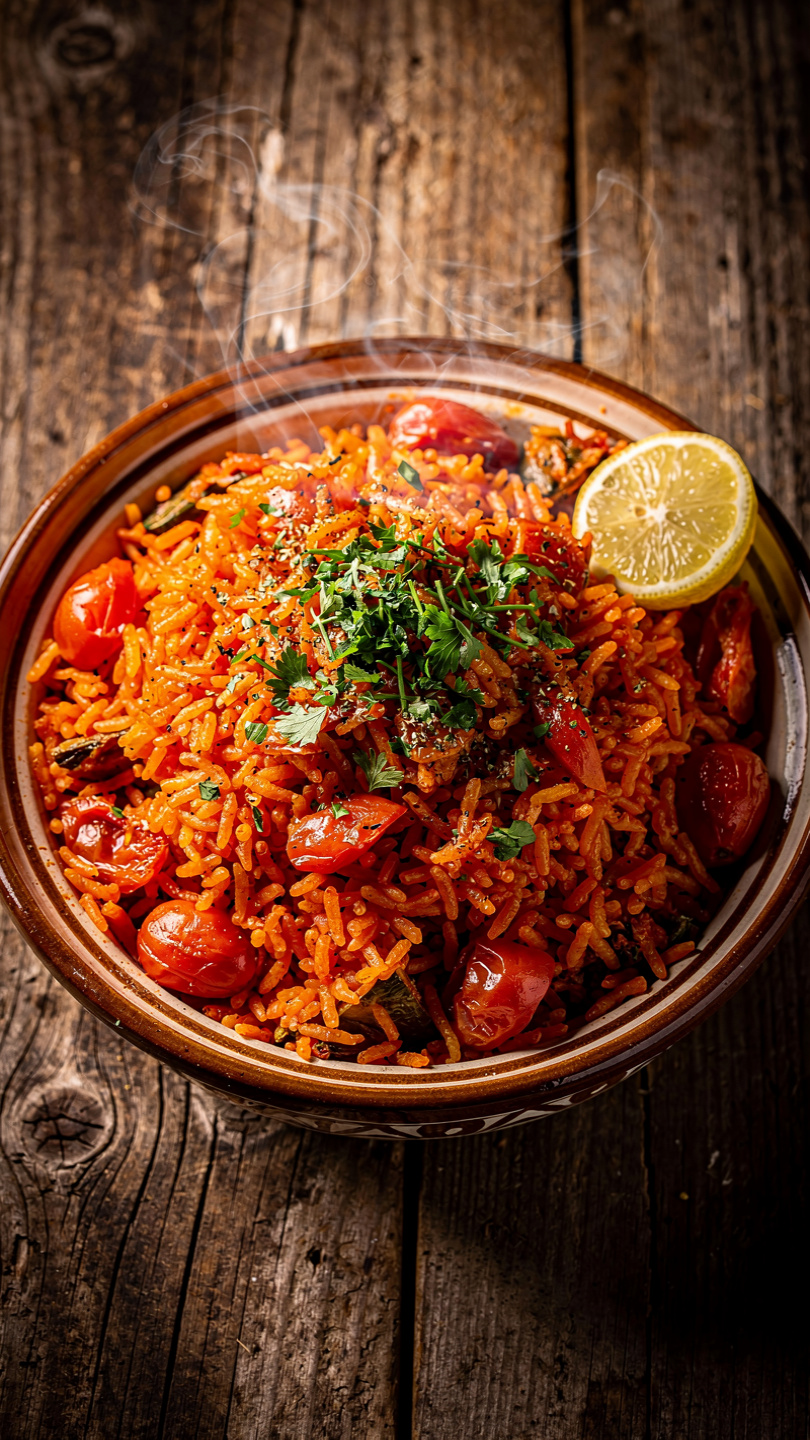
Persian Tomato Rice (Dami Gojeh Farangi)
This Persian Tomato Rice is a fragrant, one-pot comfort dish where fluffy basmati rice is slow-cooked with ripe tomatoes, warm spices, and a golden crispy crust called tahdig. A beloved Persian classic your whole family will crave.

The Persian Rice Dish You Will Make on Repeat
If you have ever sat down to a Persian meal and found yourself sneaking extra spoonfuls of rice long after you were full, you already understand the magic of dami. Persian Tomato Rice, known as Dami Gojeh Farangi, is one of the most comforting and quietly spectacular tomato and rice recipes in the entire canon of Persian dishes. It is a homemade tomato rice dish where ordinary pantry staples are transformed by patience, warm spices, and the gentle sizzle of a pot doing its work.
This is not just a tomato rice side dish. It is a full experience, complete with a golden, crackly crust on the bottom of the pot that Persian cooks call tahdig, which roughly translates to "bottom of the pot." That crust is the most coveted part of any Persian rice recipe, and this version delivers it beautifully.
What makes this quick rice tomato dish so special is also what makes it accessible. You do not need exotic ingredients or special equipment. A wide, heavy-bottomed pot with a tight lid is the single most important tool here, and using good-quality basmati rice will elevate the entire result. The right tools and ingredients genuinely make the difference between good rice and unforgettable rice.
Tools & Ingredients We Recommend



Why Persian Tomato Rice Is Worth Learning
Persian rice recipes are built around a philosophy of coaxing maximum flavor from minimum fuss. The tomatoes are cooked down into a rich, spiced base before the rice ever touches the pot. That base is what gives every grain its color, its savoriness, and its subtle warmth from turmeric, cumin, and a whisper of cinnamon.
The spice combination might sound unexpected in a rice tomato recipe, but it is the very thing that lifts this dish from simple to deeply satisfying. The cinnamon is barely there. The turmeric gives the rice its warm golden hue. The cumin anchors everything with an earthy depth.
Chef's Tip: Do not skip soaking the basmati rice. Even 30 minutes in cold water makes the grains longer, fluffier, and less likely to clump. It is the single most impactful step in any Persian rice dish.
The Secret to Perfect Tahdig Every Time
Tahdig is the crispy rice crust that forms at the bottom of the pot during the final low-and-slow steam. It is the crown jewel of this homemade tomato rice dish, and with a few simple techniques, you can nail it consistently.
Here is what matters most:
- Use a heavy pot. Thin pots create hot spots that burn instead of crisp.
- Keep the heat genuinely low. Once the lid goes on for the final steam, resist the urge to peek or turn up the heat.
- Use the towel trick. Placing a clean kitchen towel under the lid absorbs excess steam and keeps the crust dry and crispy rather than soggy.
- Be patient. The full 25 to 30 minutes of steaming is not optional. The wait is where the magic happens.
When you flip or scoop the rice onto a platter and that golden crust comes with it, you will understand why Persian cooks guard this technique so carefully.
Serving Your Persian Tomato Rice
This dish is a natural companion to grilled lamb, braised chicken, or a simple cucumber and yogurt salad (mast-o-khiar). It is hearty enough to stand alone as a vegetarian main with a side of flatbread and fresh herbs.
For a complete Persian spread, serve it alongside a simple herb platter (sabzi khordan) with radishes, green onions, fresh basil, and mint. The brightness of fresh herbs alongside the warm, tomato-steeped rice is a combination that never gets old.
Ready to make it? Here is the full step-by-step recipe:
Persian Tomato Rice (Dami Gojeh Farangi)
This Persian Tomato Rice is a fragrant, one-pot comfort dish where fluffy basmati rice is slow-cooked with ripe tomatoes, warm spices, and a golden crispy crust called tahdig. A beloved Persian classic your whole family will crave.
Ingredients
- 2 cups basmati rice, rinsed and soaked 30 minutes, then drained
- 4 ripe tomatoes, medium, roughly chopped
- 2 tbsp tomato paste
- 1 yellow onion, medium, finely diced
- 3 garlic cloves, minced
- 3 tbsp vegetable oil, divided
- 2 cups water
- 3/4 tsp turmeric
- 1/2 tsp ground cumin
- 1/4 tsp ground cinnamon
- 1 1/2 tsp salt, or to taste
- 1/2 tsp black pepper, freshly ground
- 2 tbsp fresh parsley or dill, chopped, for garnish
Instruction
Rinse the basmati rice under cold water until the water runs clear. Soak in cold water for 30 minutes, then drain completely and set aside.
Heat 2 tablespoons of oil in a wide, heavy-bottomed pot over medium heat. Add the diced onion and cook for 7 to 8 minutes, stirring occasionally, until softened and golden at the edges.
Add the minced garlic and cook for 1 minute until fragrant. Stir in the tomato paste and cook for 2 minutes, letting it deepen in color.
Add the chopped tomatoes, turmeric, cumin, cinnamon, salt, and black pepper. Stir to combine and cook for 5 minutes until the tomatoes begin to break down into a saucy base.
Pour in the 2 cups of water and bring to a gentle boil. Add the drained rice and stir once to distribute evenly. Let the mixture cook uncovered over medium-high heat until most of the surface water is absorbed and small craters appear on top, about 8 to 10 minutes.
Drizzle the remaining 1 tablespoon of oil around the edges and over the top of the rice. Place a clean kitchen towel or paper towels under the pot lid to absorb steam, then cover tightly.
Reduce the heat to the lowest setting and cook undisturbed for 25 to 30 minutes. The bottom will form a golden, crispy crust called tahdig.
To serve, scoop the fluffy rice onto a platter, then use a spatula to lift the tahdig crust from the bottom and place it on top or serve it on the side. Garnish with fresh parsley or dill.
Equipment
- Wide heavy-bottomed pot with tight-fitting lid (4 to 5 quart)
- Wooden spoon or silicone spatula
- Fine mesh strainer
- Clean kitchen towel or paper towels
- Chef's knife and cutting board
Notes
Storing and Reheating Leftovers
Leftover Persian Tomato Rice stores beautifully in the refrigerator for up to 4 days in an airtight container. To reheat, add a small splash of water and warm it gently on the stovetop over low heat, or microwave it covered with a damp paper towel.
The tahdig crust will soften as it sits, so enjoy that part while it is fresh. If you are planning ahead, you can prepare the tomato base a full day in advance and refrigerate it, then finish the rice when you are ready to serve.